
Project Background
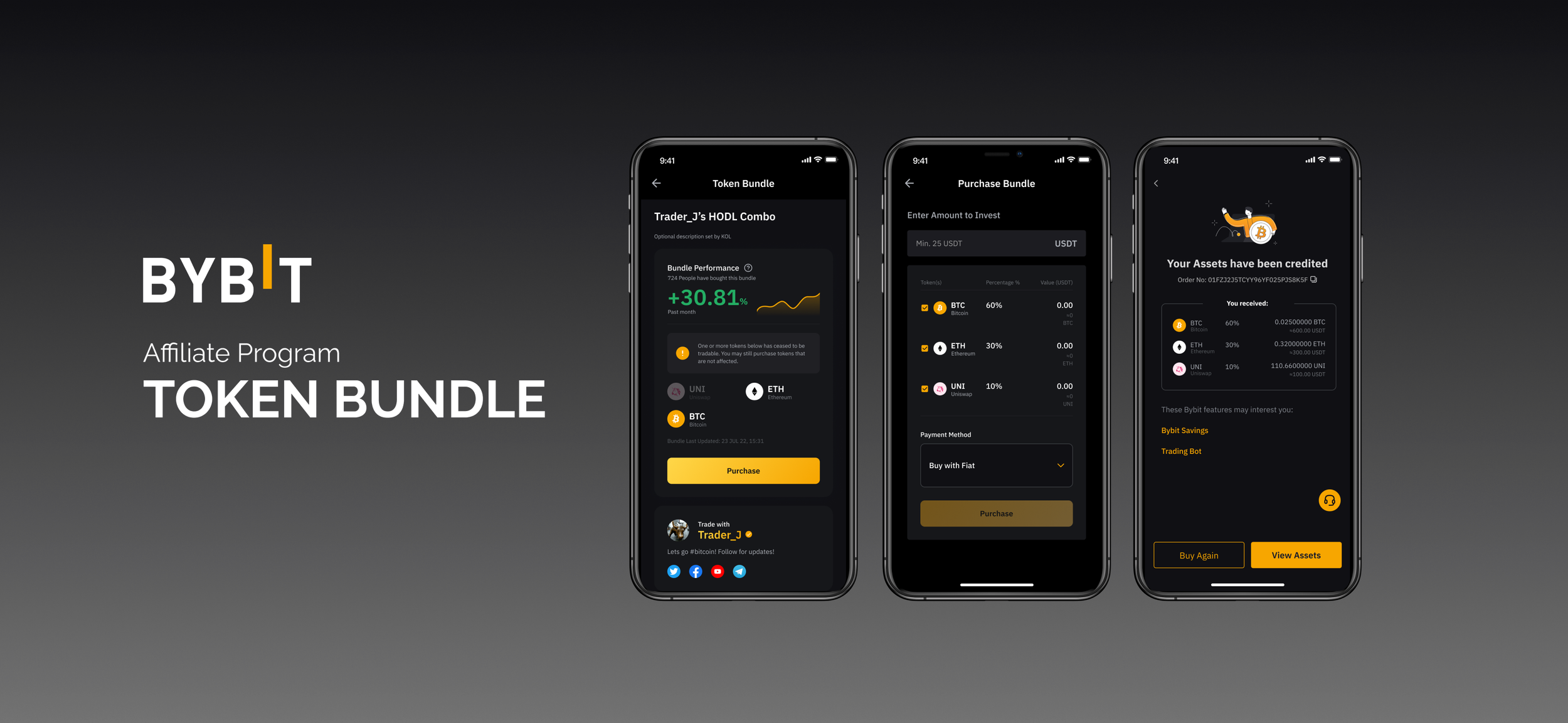
The Token Bundle project started as an idea that a product manager and myself conceptualized. This idea would go on to gain the buy-in of business stakeholders and the COO of the company because it could help our Affiliates (KOLs / Crypto Influencers) convert users more efficiently.
This project started during Q2 of 2022, when crypto was all the rage and retail investors were flooding in. However not many retail investors knew what crypto was, what tokens to buy, and in what quantities. Enter the Token Bundle. A zero-to-one product that could bring crypto to the masses. This product was especially important for our Affiliates because a relatively large portion of the company’s revenue was derived from the success of our Affiliates.
This project launched in July 2022, on web, mobile web, and mobile app.
Project Goals
The Token Bundle project has 2 main goals set out by our Affiliates management team and Business Development team.
>50 Affiliates
Created at least one bundle in the first week of launch
USD $100,000
Worth of orders placed in the first week of launch
My Role
I’m the sole designer on this project. I worked with one Product Manager and 2 Engineers, and a Business Strategist.
Experience Design, Conceptualization, User Research. Also maintained design system for Web-based components.
The Affiliate Portal
To begin, the Token bundle feature was an add-on to an existing product called the Affiliate Portal. This was a product meant for Bybit Affiliates to keep track of their revenue and earnings. Their job was to funnel customers onto the Bybit brokerage platform by means of referral links and running campaigns to keep their clients trading
With each transaction, the brokerage earns a portion of fees incurred, and the affiliate gets a commission.
The Affiliate portal aims to help Affiliates to gain more traction in the market and in turn, generate considerable revenue for Bybit.
Key finding:
after some user testing and interviews with a couple of Affiliates and Account managers, we noticed that our customers tended to input whole numbers. I also realized, through observation that many testers would mentally add and subtract percentage values so that the allocation adds up to a 100%.
To reduce the mental load of our users, I decided to add small buttons to immediately enter commonly used values such as 50%, 25%, 10%. In addition, instead of displaying the sum of each percentage allocation, I opted to display the remaining un-utilized amount instead. This serves to remind our users that “7%” (figure below) hasn’t been allocated so they would easily be able to add it to whichever token they wished.
We also wanted to avoid automatically calculating and pre-filling a value for our users. That would only serve to confuse our users and might disrupt their calculations.
After configuring the bundle, Affiliates will then be able to share and track the performance of the bundle within the Affiliate Portal.
The Affiliate’s social media links and a message from them would be shared, along with a custom branded link to maintain the trustworthiness of the platform.
More importantly, the allocations and performance of the bundle plotted over the past 52 weeks, and the amount of people who bought this bundle is also displayed to effectively allow the Affiliate to use statistics to sell his bundle.
I have also proposed to add a Q&A section so that customers who might be new to crypto can find the necessary information needed to assuage their concerns, and to properly onboard them onto the trading Platform.
One of the difficulties is not to also be able to responsively adapt this design to mobile web/app, but also properly handle the various edge cases that might occur.
For example, how would the Bundle page look and be presented to a customer when one or more tokens within the bundle has been delisted from trading? Or how should I handle a scenario where the Affiliate has deleted the Bundle? Shown below are just some examples of unforeseen cases that we have to handle in the front-end
Creation of a Token Bundle (Affiliate-perspective)
The creation of a bundle from an Affiliate’s point of view is fairly straightforward. All they have to do is to :
Name their bundle
Add tokens and define an allocation to each token.
Share bundle
There are some intricacies from an experience standpoint regarding adding and allocating a percentage to each token
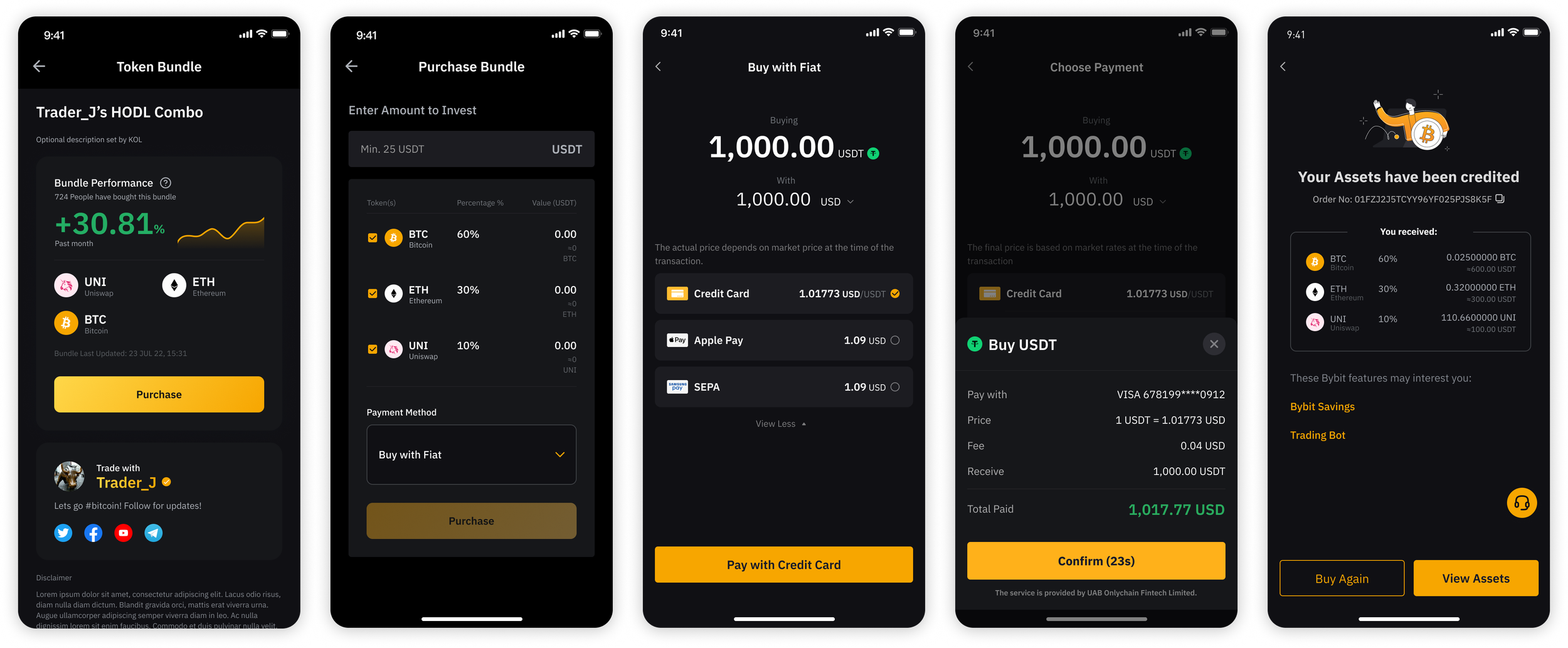
Scanning the QR code on the app, or tapping the link provided by the Affiliate, customers would be led to the Bundle page.
After reading the Q&As or the bundle description, they may choose to buy the Bundle.
The buying process is made as straightforward as possible. Customers can use either Fiat from their accounts, Credit card payment, Apple pay, and more depending on the region they are domiciled in based on the KYC records.
Key finding:
Majority of the customers who might use this product are users new to the crypto markets. These customers are not sophisticated users. Having entered this journey, they would have sought to follow the recommendation of their Key Opinion leader (KOL). Hence, the Buy flow is designed to include as much information as is necessary to transparently present to these new-to-crypto customers the amount in USD and crypto allocation based on the amount they chose to invest.
Although initially, we debated about giving customers the ability to alter the allocation, we decided against it in lieu of the findings above.
Buying a Bundle (Customer’s perspective)
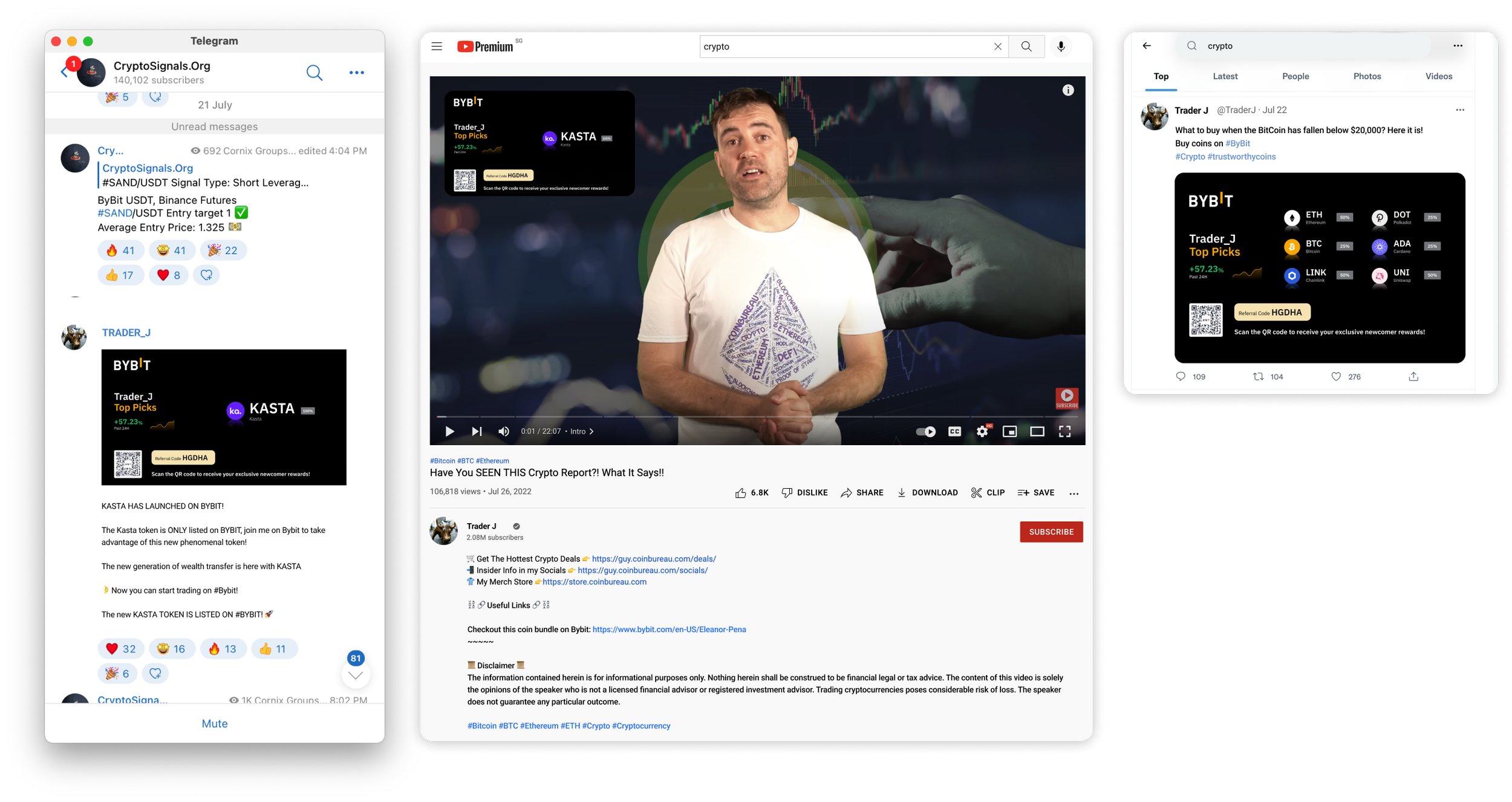
The only entry-point a customer has to access these bundles will be links and QR codes shared directly by the Affiliate. These are some examples of how Affiliates would share their bundles across social media.